Wszystko o sklepach internetowych na WooCommerce — zakładanie, pozycjonowanie, wydajność (Core Web Vitals), płatności, wysyłka, integracje i sprzedaż. Praktyczne przewodniki dla właścicieli e-commerce.
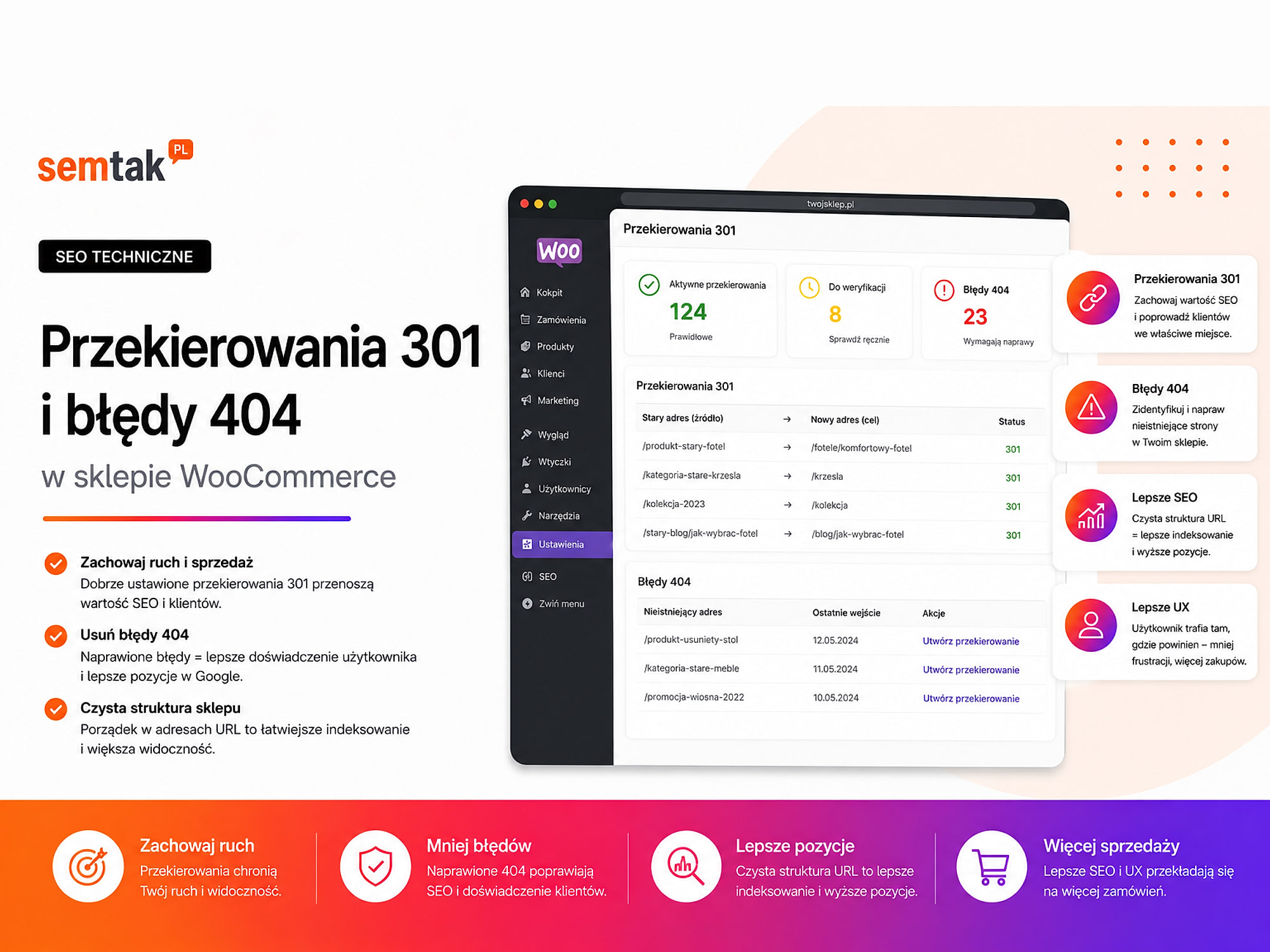
Deleted products and changed addresses generate 404 errors that waste crawl budget and cut into sales. We show when to use a 301, when a 410, how to build a redirect map and how to monitor 404s.
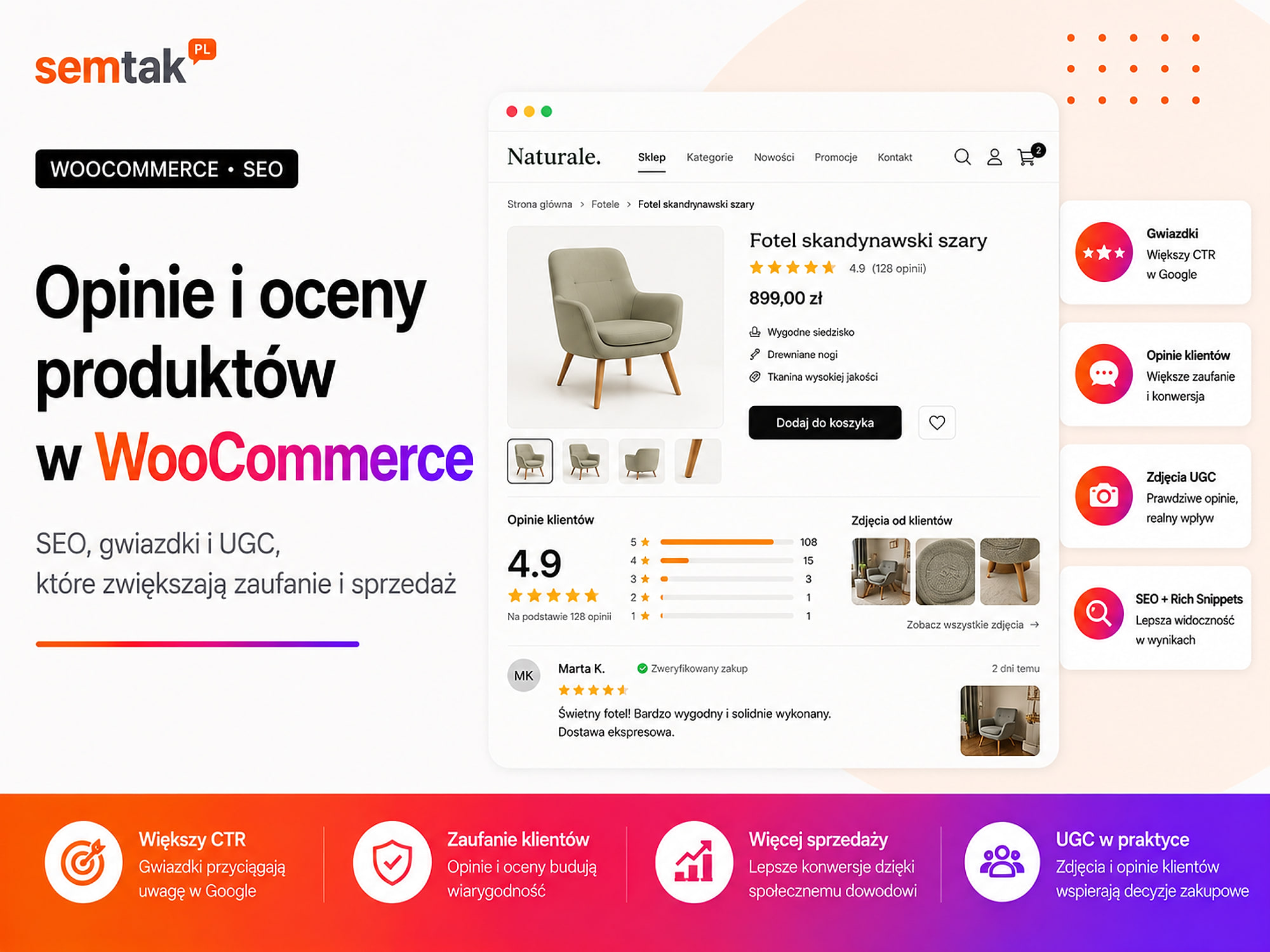
Product reviews and ratings are both proof of trust for the customer and a quality signal for Google. We show how to collect genuine reviews, implement Review/AggregateRating schema and earn stars in the results — without faking ratings, which can be penalised.
Faceted navigation in WooCommerce can generate thousands of junk URLs from filters. We show you when a filter is a valuable keyword page, and when it should be noindexed or a parameter.
WooCommerce store indexing: block the cart, my-account, ?filter parameters, pagination and tags, but keep categories and products in Google. A page → decision table plus robots vs noindex vs canonical.
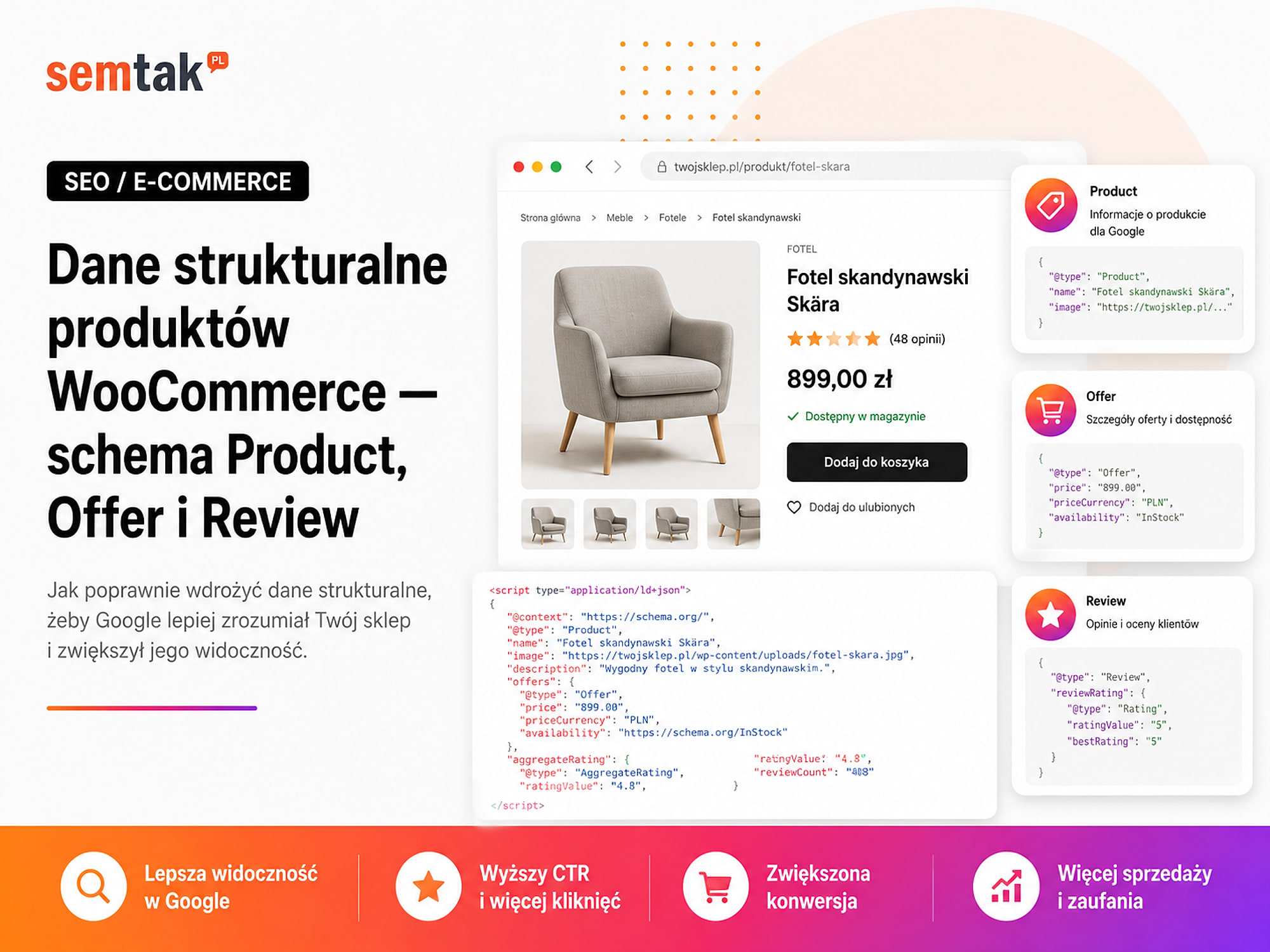
WooCommerce product structured data (Product, Offer and Review schema) lets Google show price, availability and ratings in the results. We explain how it works and how to avoid mistakes.
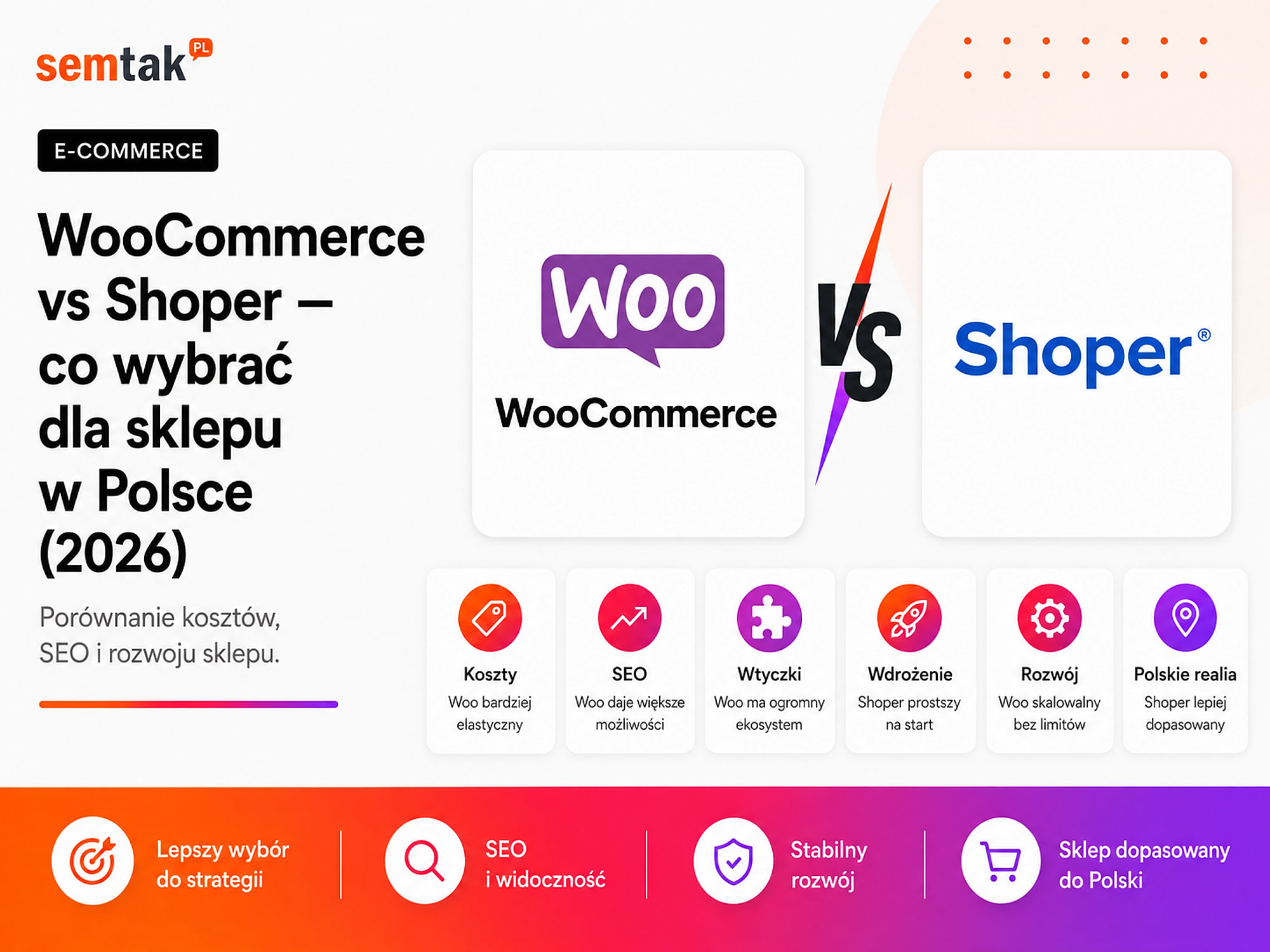
WooCommerce gives you full ownership and no sales commission; Shoper is a ready-made SaaS with a fast subscription start. We compare costs, ownership, SEO, scaling and fees to help you choose with confidence.
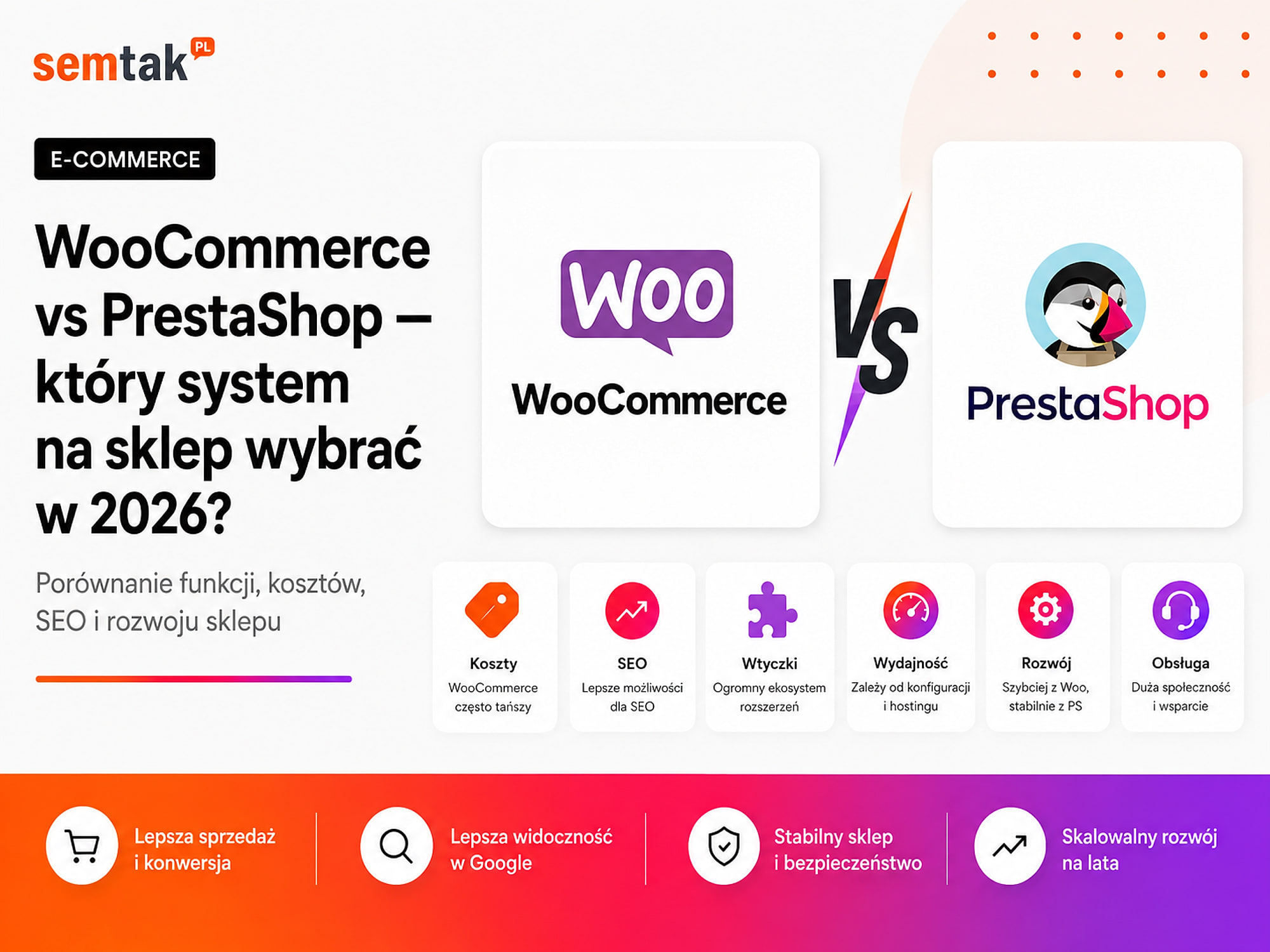
WooCommerce vs PrestaShop: flexibility, costs, hosting, community, SEO and integrations with the Polish ecosystem. An honest comparison and a clear verdict on what to choose for your shop.
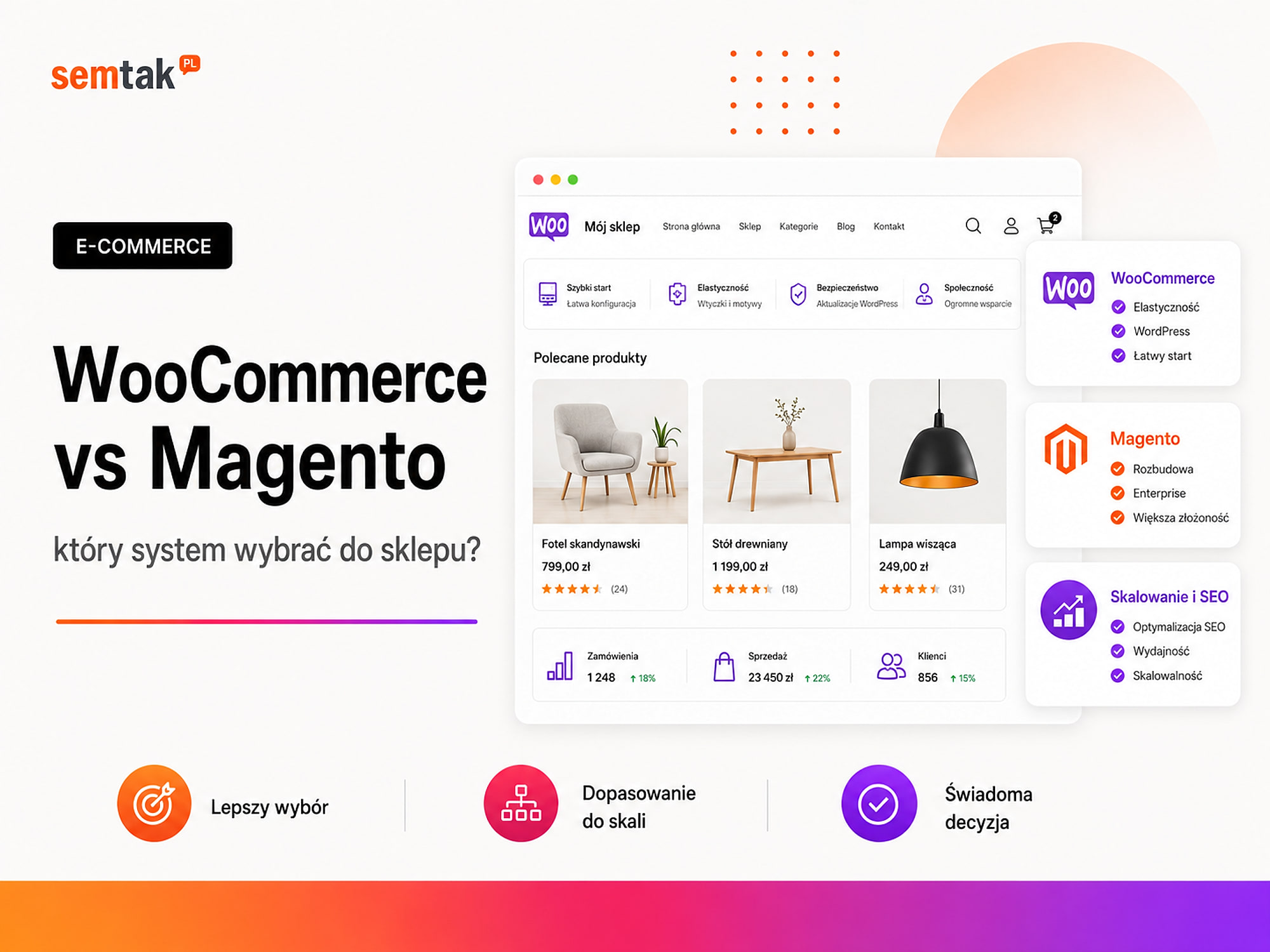
WooCommerce or Magento (Adobe Commerce)? We compare cost, complexity, hosting, enterprise scale, maintenance and support. An honest verdict on when each platform makes sense.
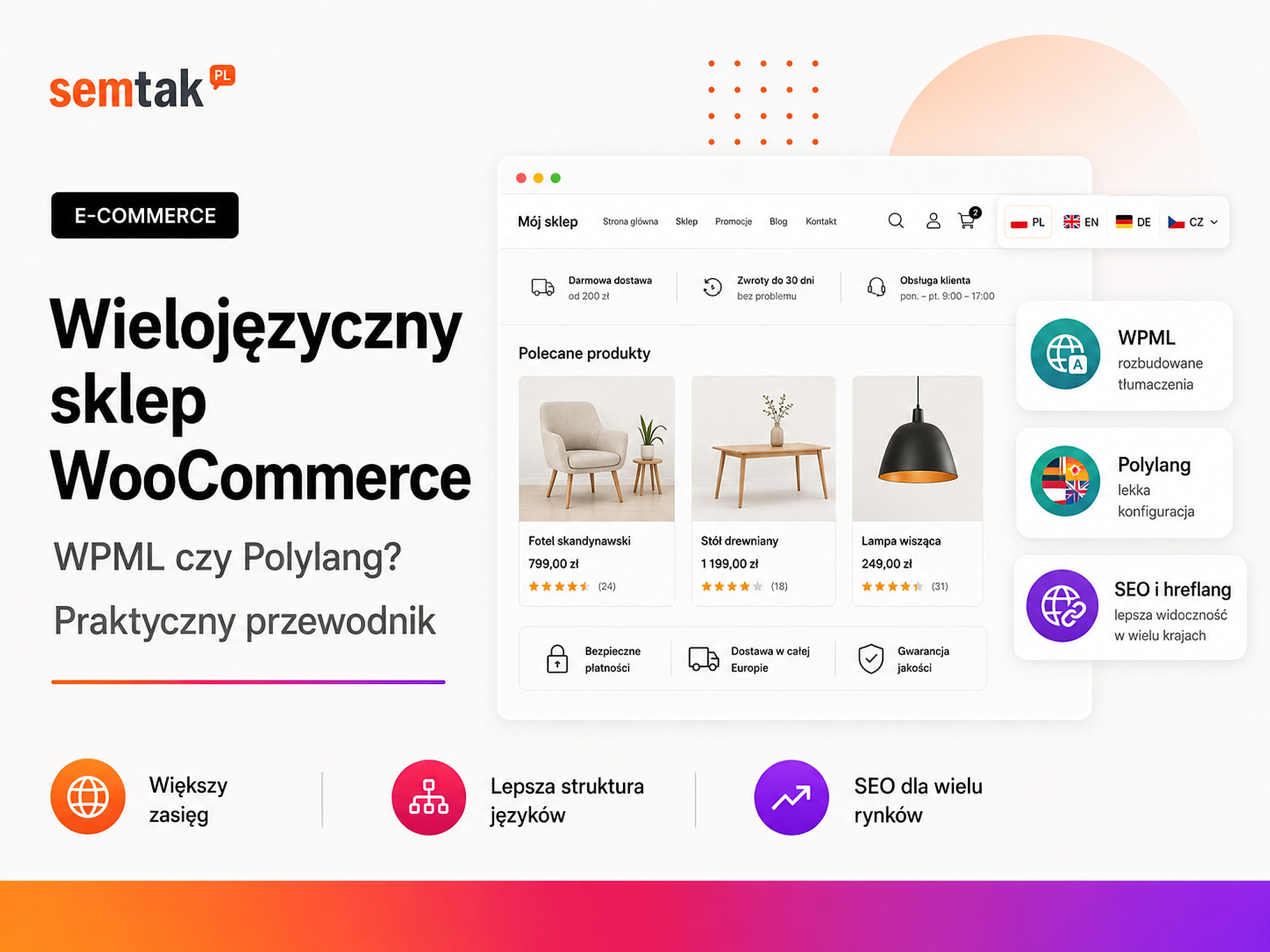
How to build a multilingual WooCommerce store that won't kill your SEO. WPML vs Polylang, URL structure with /en/, strict hreflang validation, translating products and currencies.
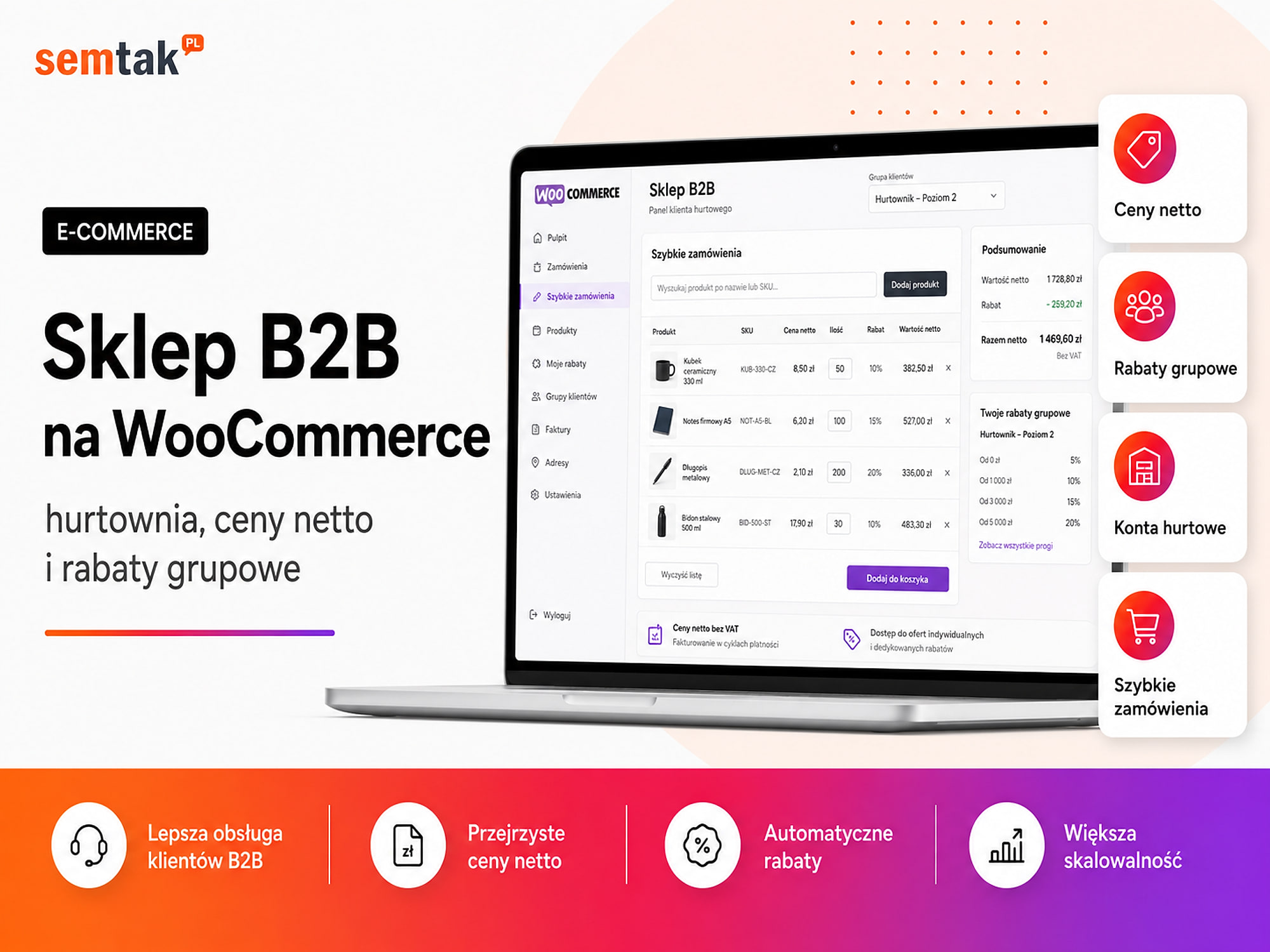
A B2B store on WooCommerce is a genuine alternative to expensive wholesale platforms. We explain how to set up net prices, pricing tiers, logistics minimums and integration with an ERP or BaseLinker.
An abandoned cart is a customer who was one step from buying. We show why people abandon carts and how to recover them: emails, remarketing, instant payments and a simple checkout.
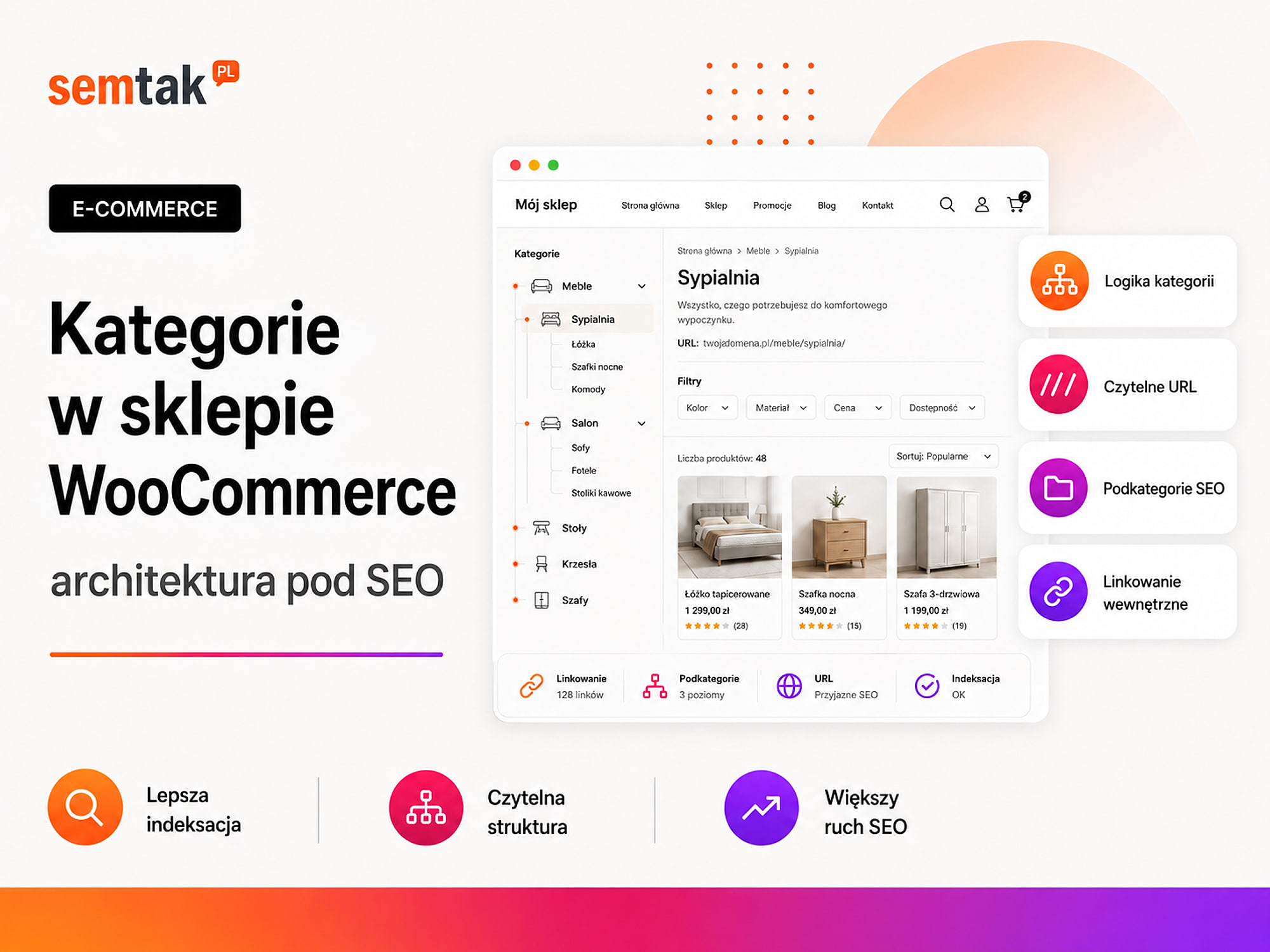
How to plan WooCommerce categories for SEO? Using a cosmetics store as an example: when to create a category, when an attribute, when a filter, and what not to index.
Store sales are the product of traffic, conversion, basket value and repeat purchases. We show you which of these four levers to move first and how to turn it into concrete actions.
Want to start an online store but don't know where to begin? We walk you through every step — from the idea and choosing a platform, through the domain and hosting, to payments, delivery, terms and conditions and your first sale.
A WooCommerce online store is usually a one-off cost of £999–4,999+ plus a few hundred pounds a year for upkeep. We break the price down into parts and show what you are really paying for.
An online store usually fails to sell for one of six reasons: no traffic, a slow site, weak product pages, a lack of trust, a poor checkout path or no measurement. Find out which problem applies to you.
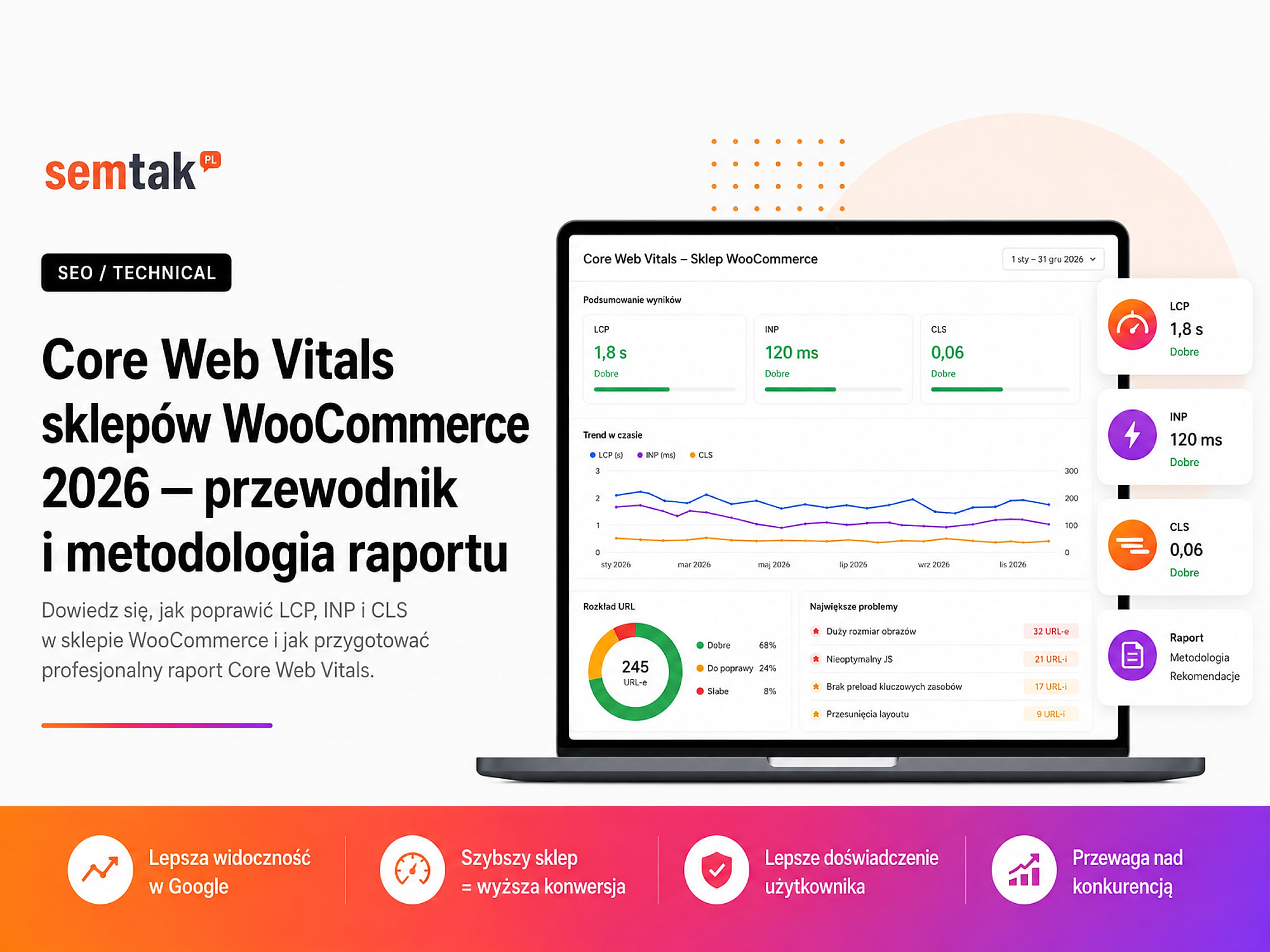
How to measure the speed of WooCommerce stores reliably: what exactly we measure (LCP, INP, CLS, TTFB), which data sources we use and what methodology a repeatable industry report applies. Plus a bottleneck checklist.
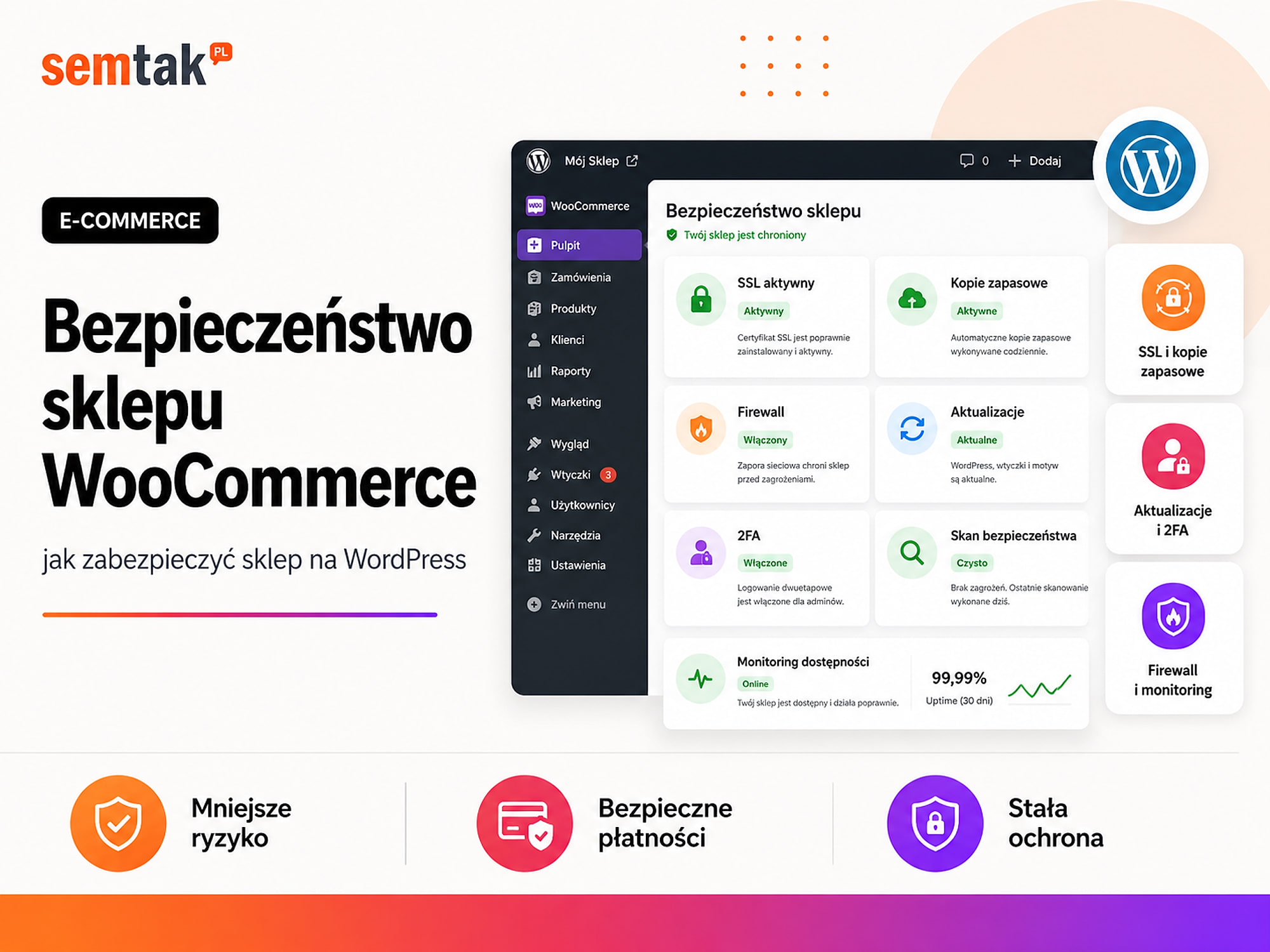
WooCommerce security is, above all, updates, backups and limited access to the admin panel. We show you how to secure a WordPress shop step by step — no theory, just practical advice.
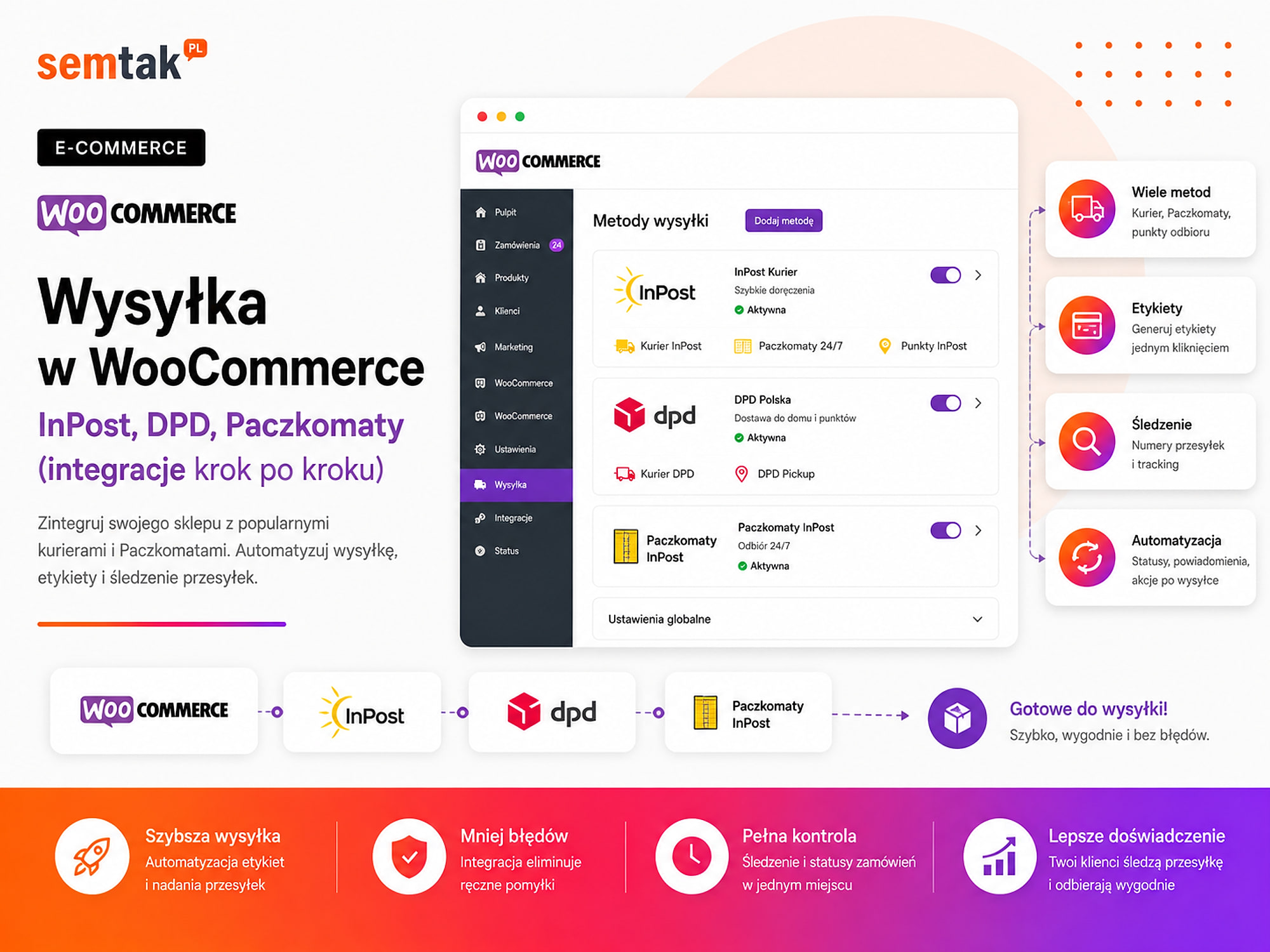
When a customer can't pick a parcel locker or sees the wrong delivery cost, the sale falls through. We show how to set up Royal Mail, couriers and parcel lockers in WooCommerce, configure zones, prices, labels and collection points, and what to test before going live with shipping.
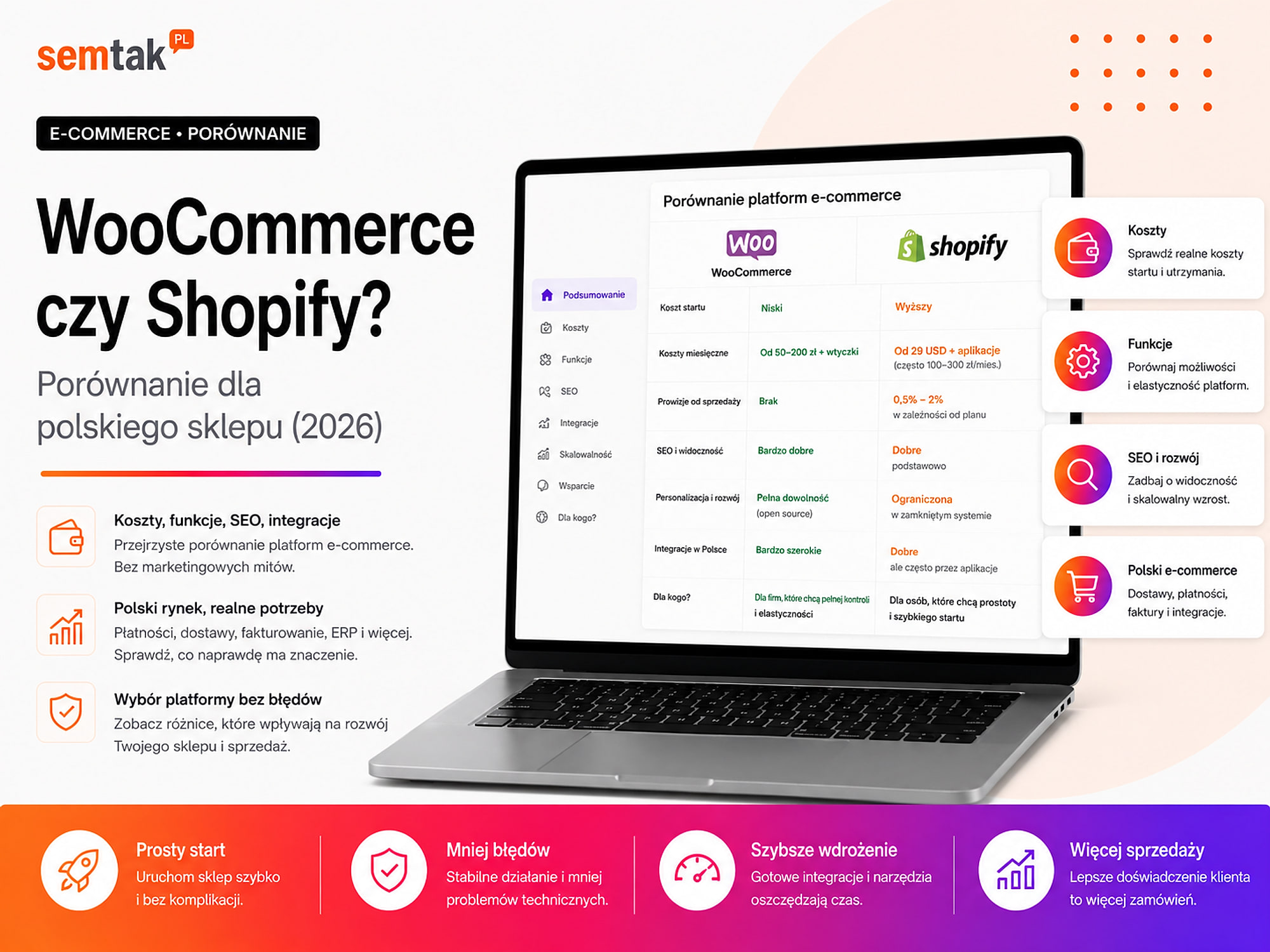
Shopify is a ready-made subscription service; WooCommerce is a store on your own server with full control. We compare costs, payments, delivery, SEO, speed, security and integrations from a store owner's perspective.
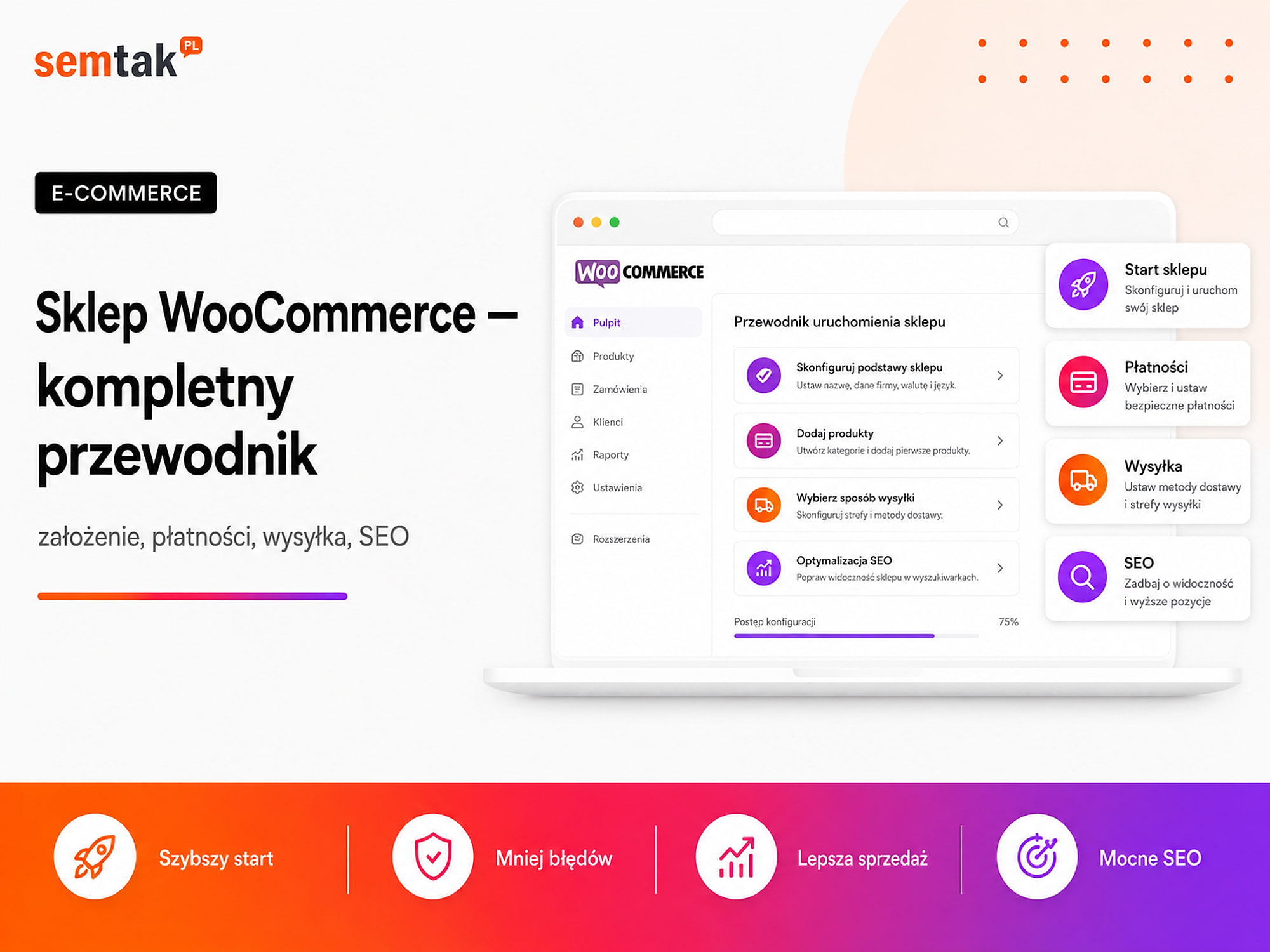
Launching a WooCommerce store does not end with installing the plugin. We walk you through the entire process: from planning and hosting, through products, payments and shipping, all the way to SEO, analytics, security and pre-launch testing.
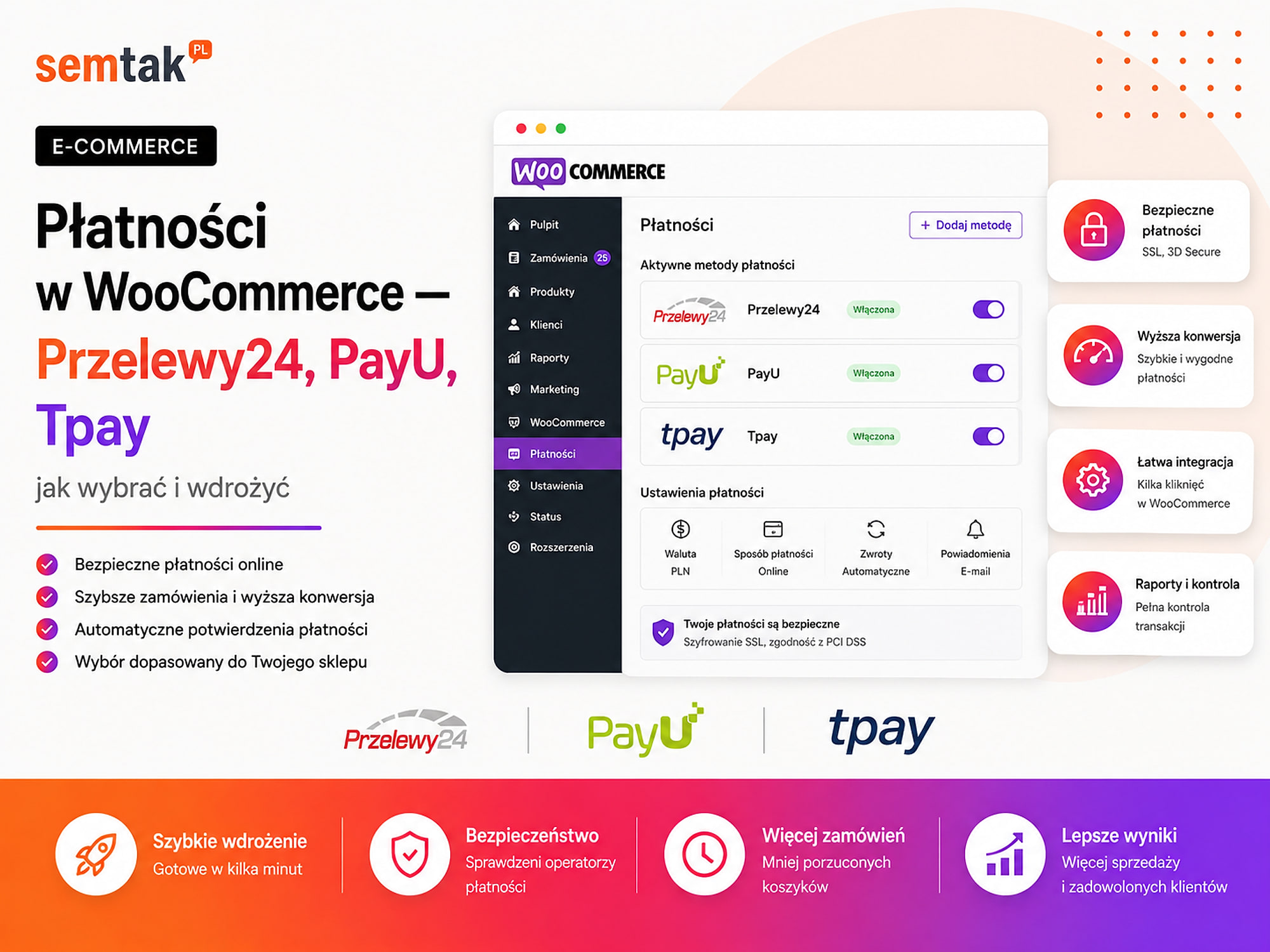
If a customer cannot pay, the sale is lost — no matter how good your ads and SEO are. We compare Przelewy24, PayU and Tpay, show you how to work out an operator's real cost, set up the gateway and test the whole process before you start selling.
Migrating a store is not a product import but a technical-SEO project: you have to move URLs, content, customers, orders, analytics and integrations. We show what to check, how to prepare a 301 redirect map and how to monitor the store after changing platform.
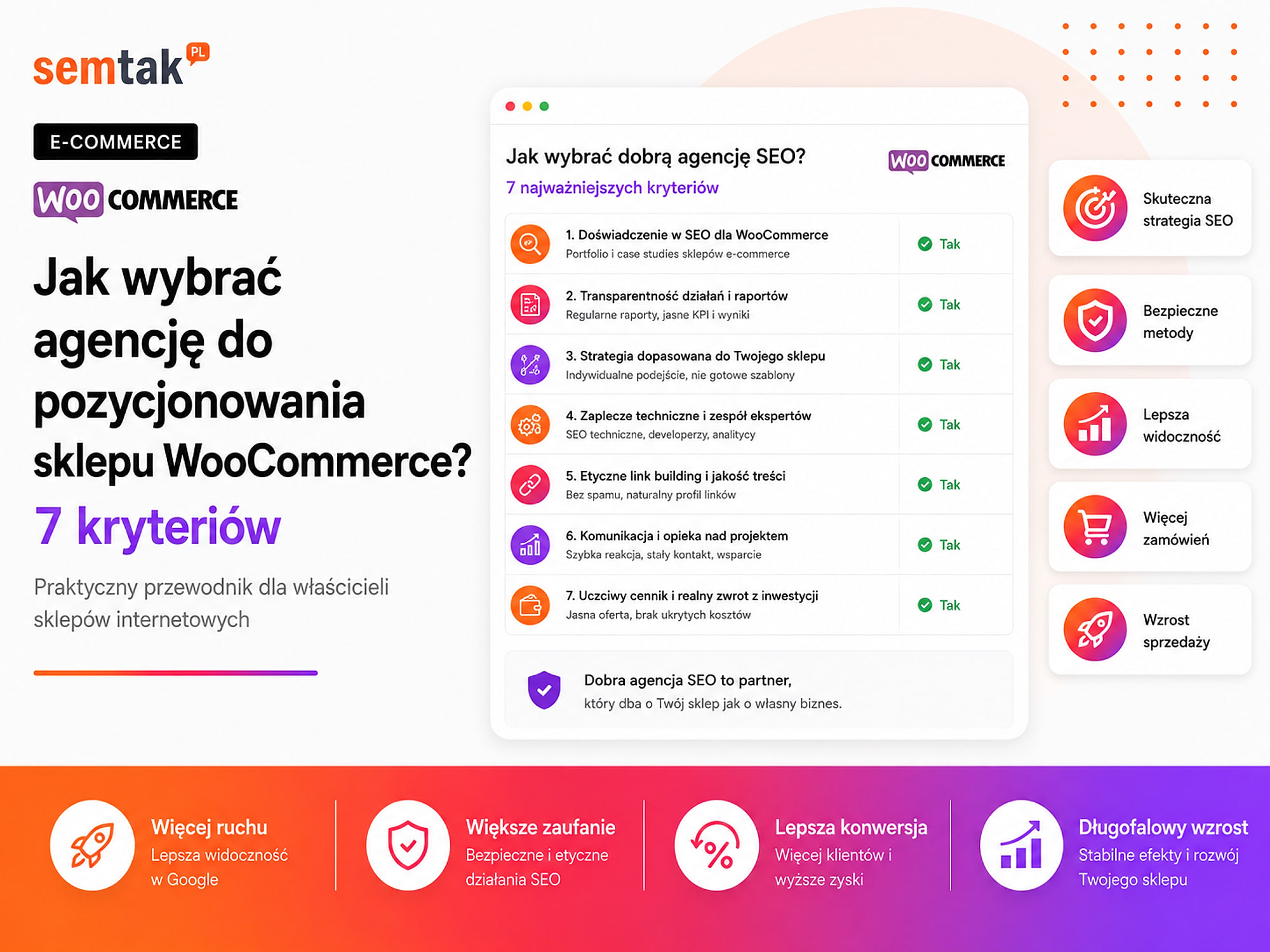
Choosing an SEO agency for a WooCommerce store should not begin with the question of price. First check whether the agency understands online stores, knows how to work with WooCommerce and measures sales rather than positions alone. Here are 7 criteria, the questions to ask and the red flags to watch for.
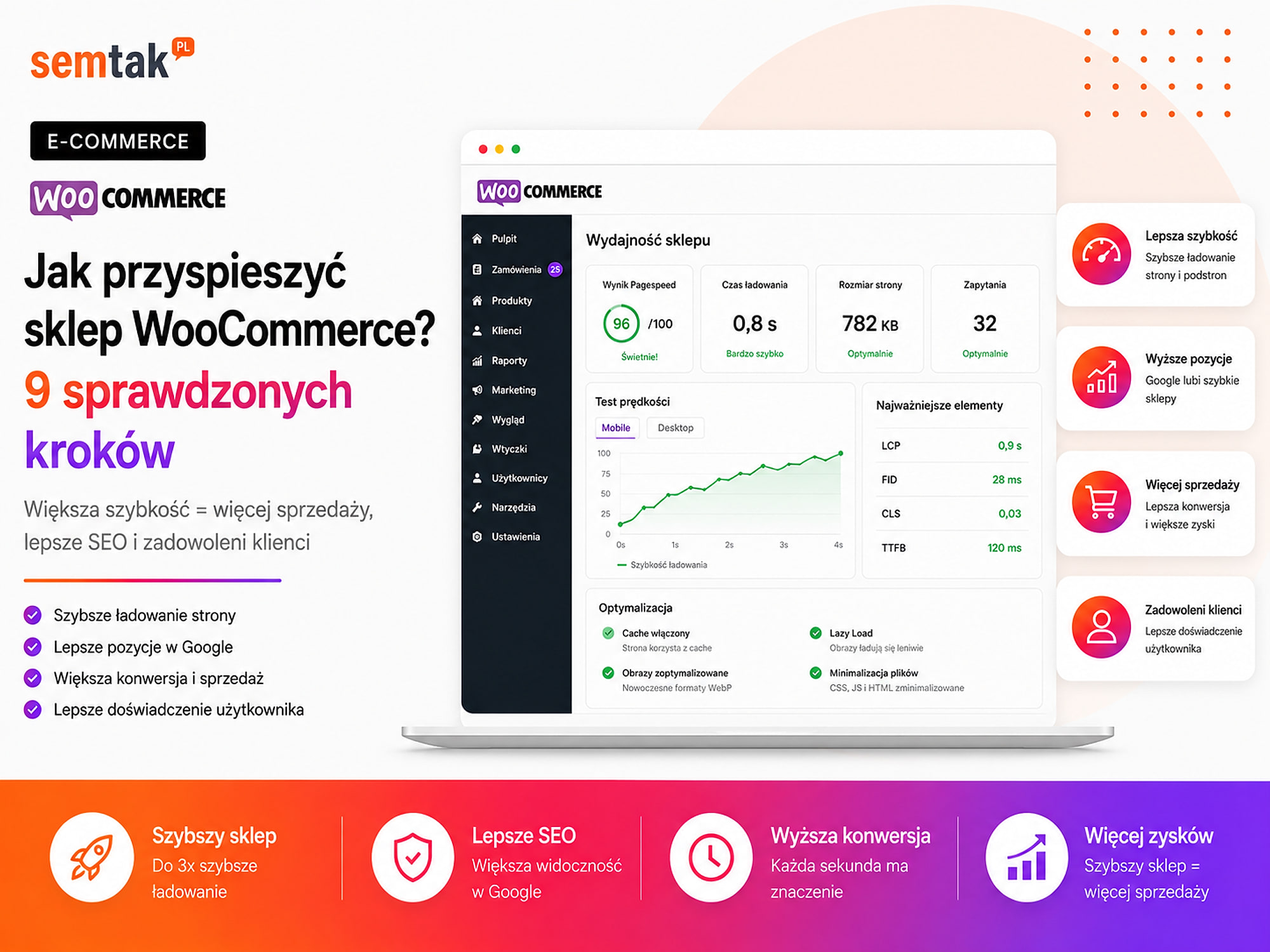
A slow WooCommerce store does not always need a more powerful server — more often the culprits are heavy images, a misconfigured cache or too many scripts. Here are 9 steps that bring order to speeding up your store without guessing and without breaking the buying process.
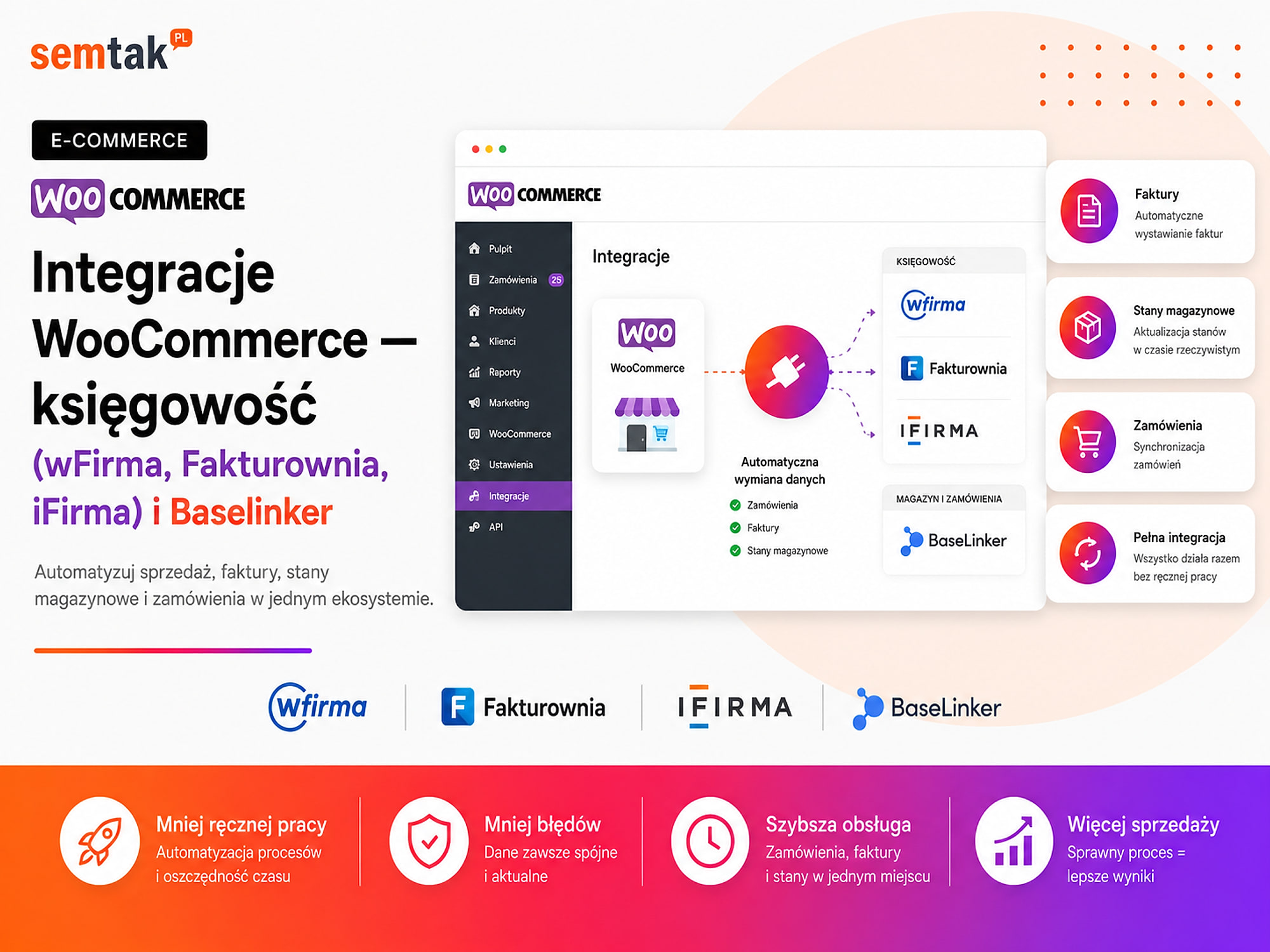
Re-typing orders into your accounting software works up to a few orders a day. We show how to connect WooCommerce with Xero, QuickBooks or Fakturownia — directly or through BaseLinker — which data to sync, what breaks and how to handle e-invoicing.
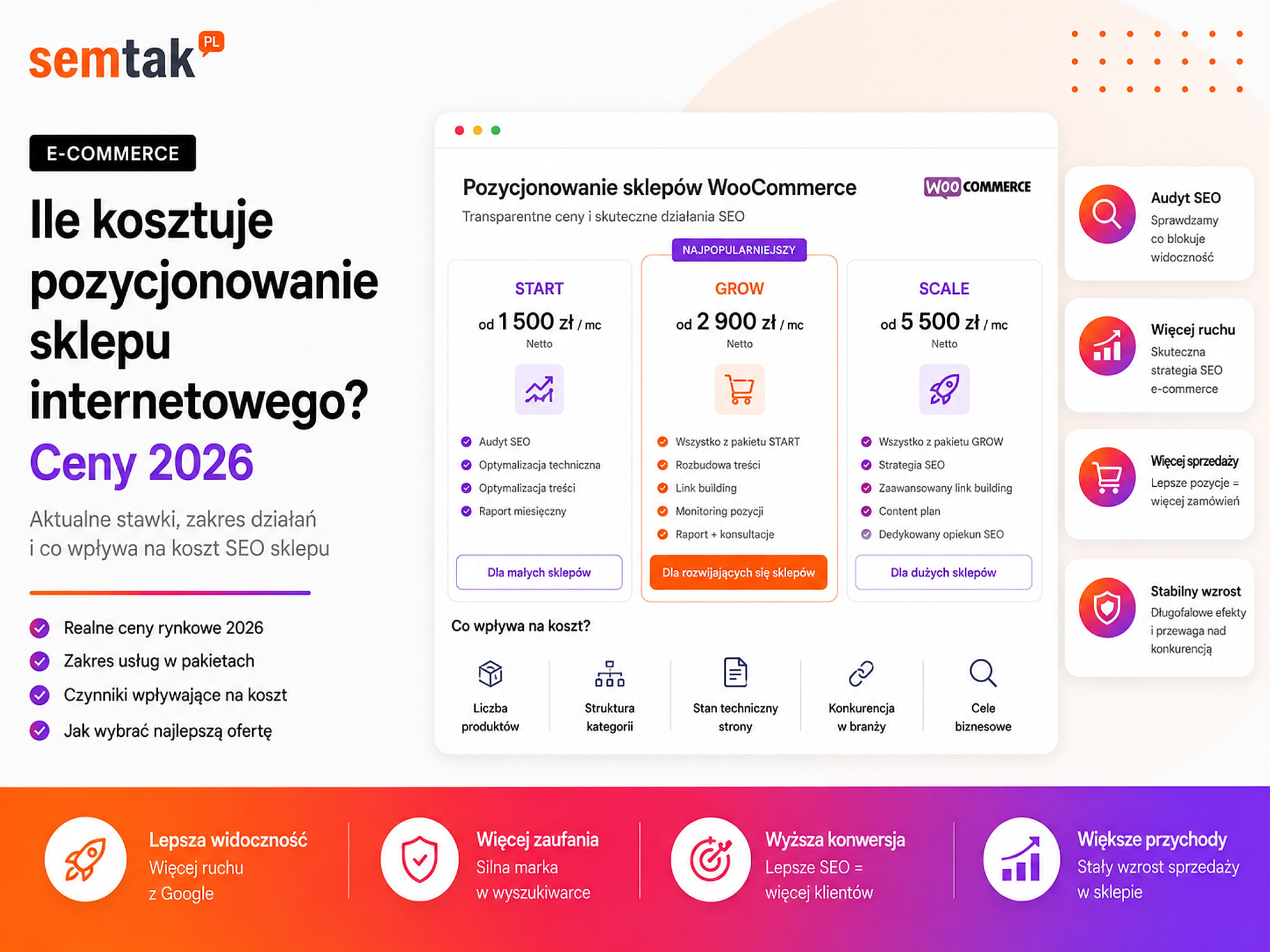
In 2026, SEO for an online store most often costs from around £399 to 1,999 net per month. We show what determines the price of store SEO, what the retainer should include and how to check whether the proposed budget makes sense.
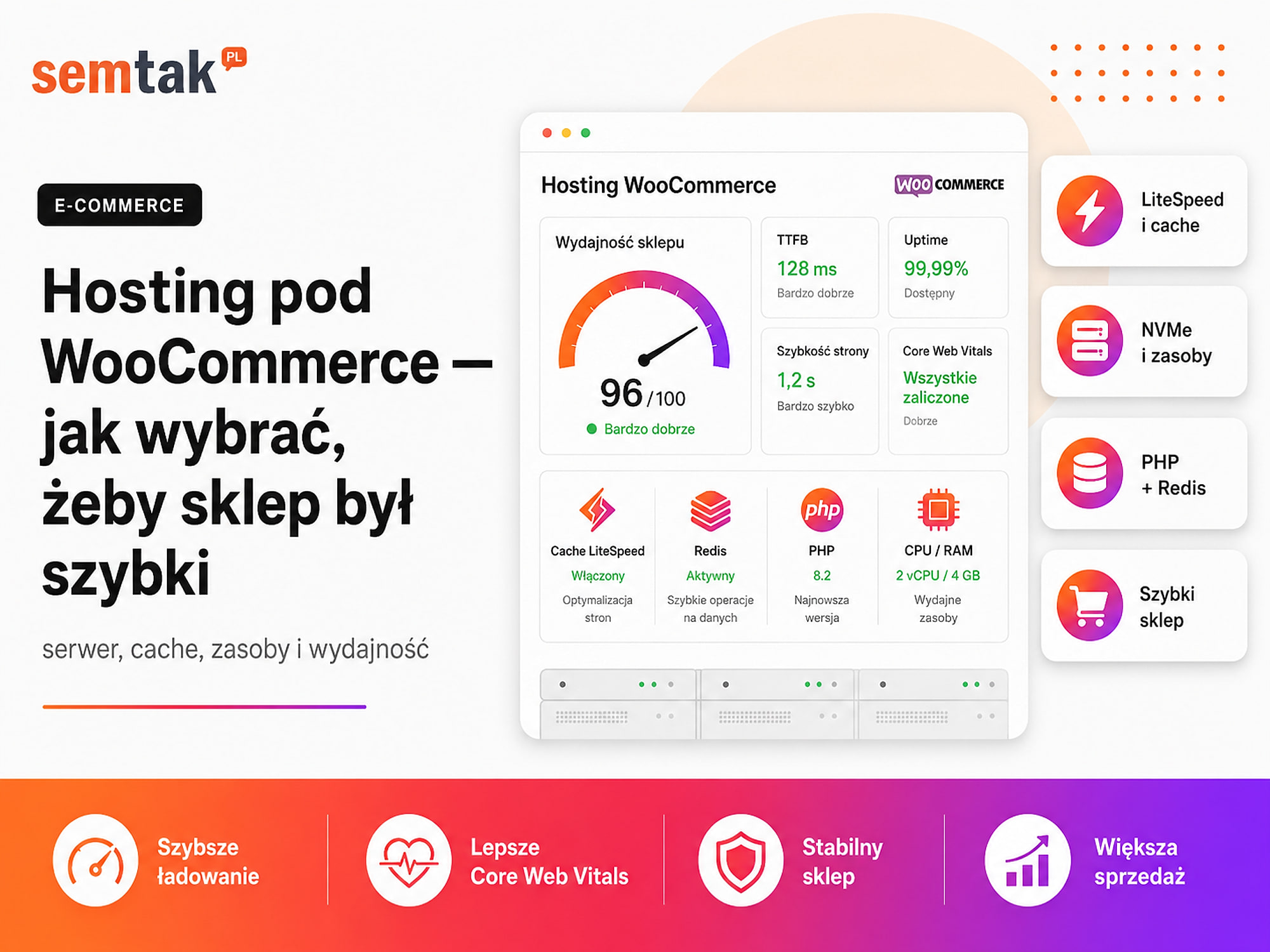
A WooCommerce store can run slowly despite unlimited transfer and fast disks, because it needs more than an ordinary website. We show which hosting parameters matter, when shared hosting is enough, when it is worth moving to a VPS and what to ask your provider.
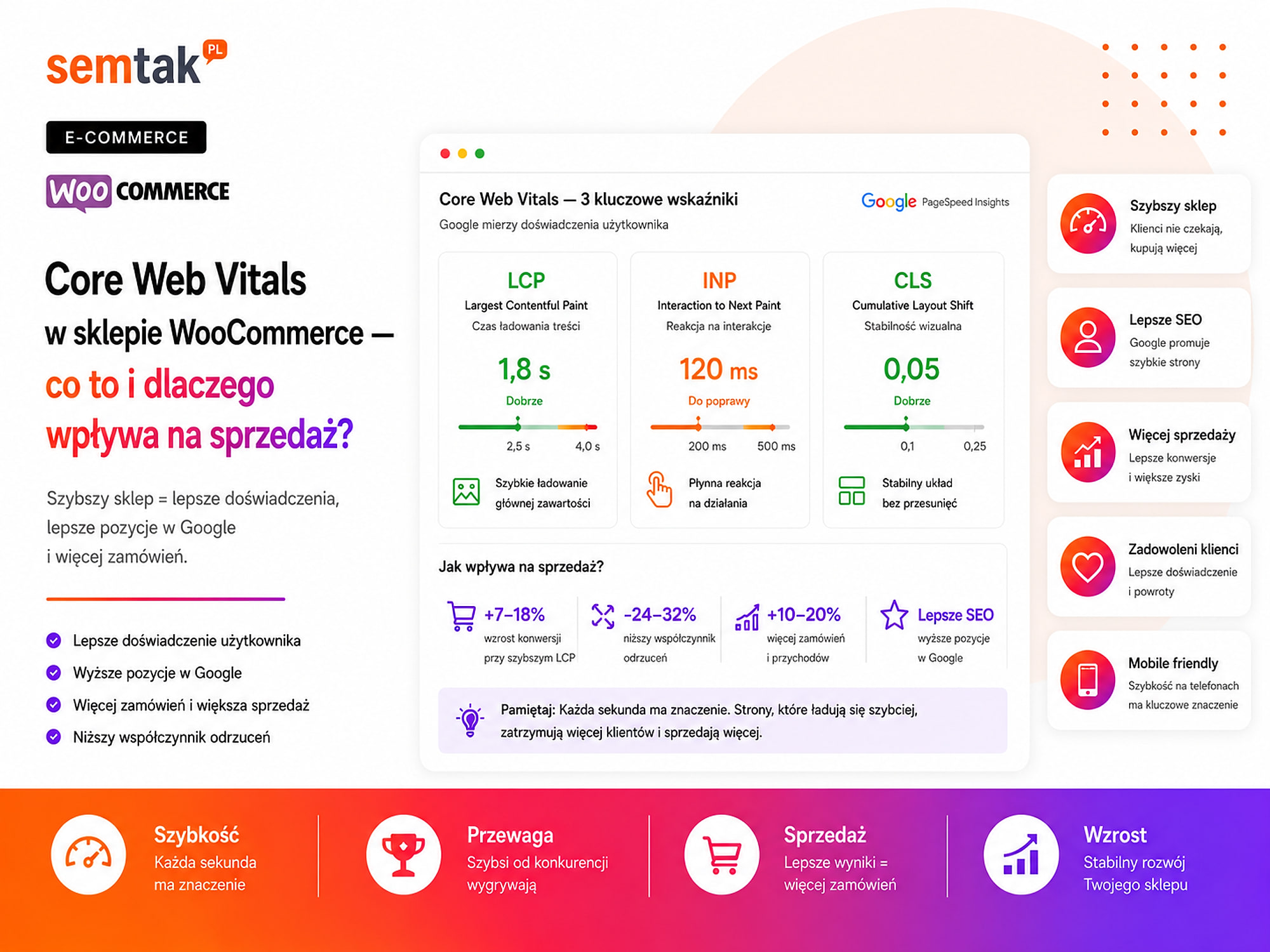
A slow product image, a store that does not react to a click, a layout that jumps — each of these problems is described by one of the Core Web Vitals metrics. We explain what LCP, INP and CLS are and how they affect the sales of a WooCommerce store.
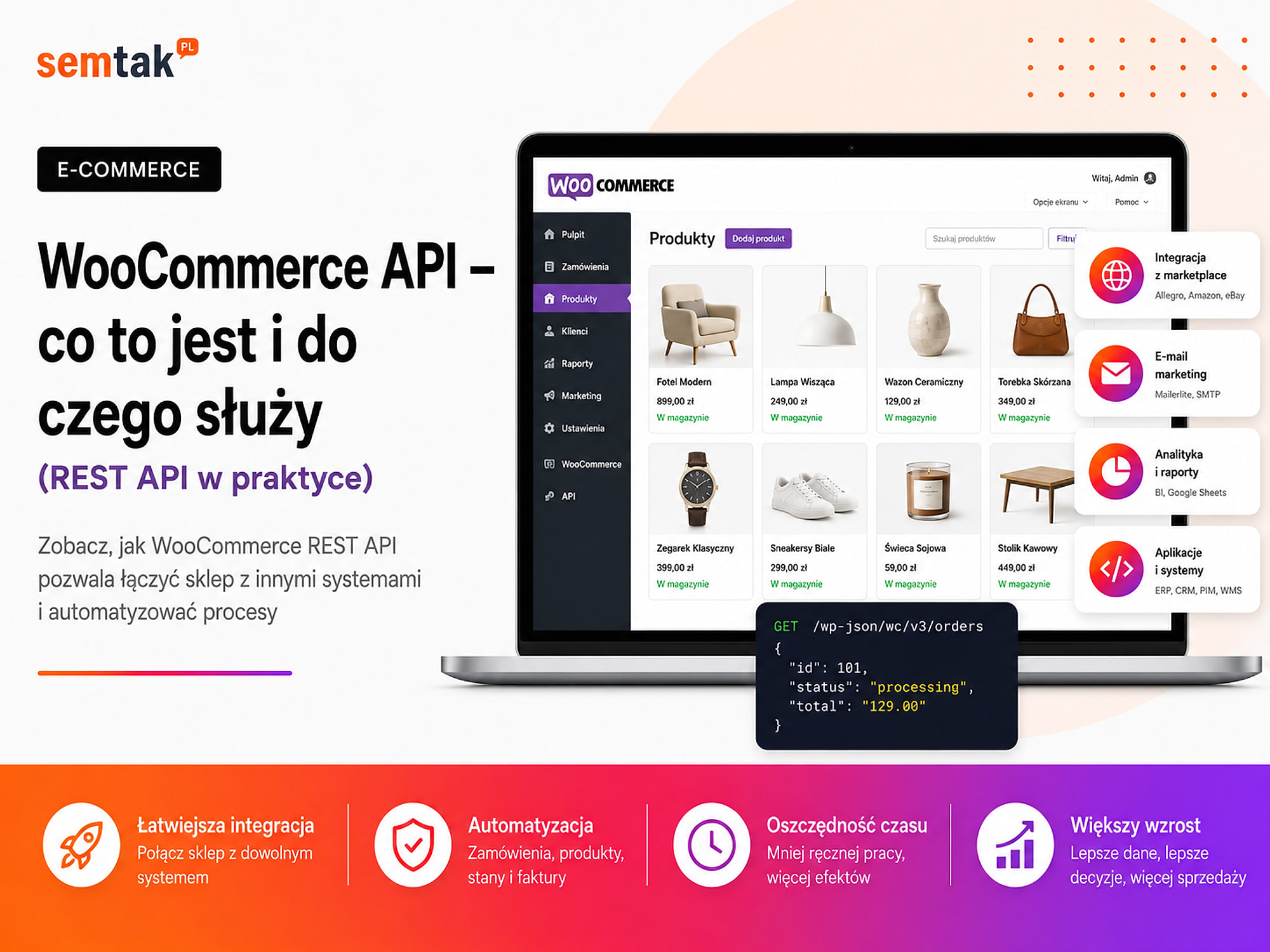
The WooCommerce API lets another system read data from your store and — once granted permission — update it, without logging into the dashboard by hand. We explain how the REST API works, what you can connect, how it differs from the Store API and webhooks, and when to choose a plugin instead of a custom integration.
WooCommerce turns a WordPress website into an online shop. We explain in plain language how it works, how much it costs, its advantages and drawbacks, and when it is a good choice for your shop.
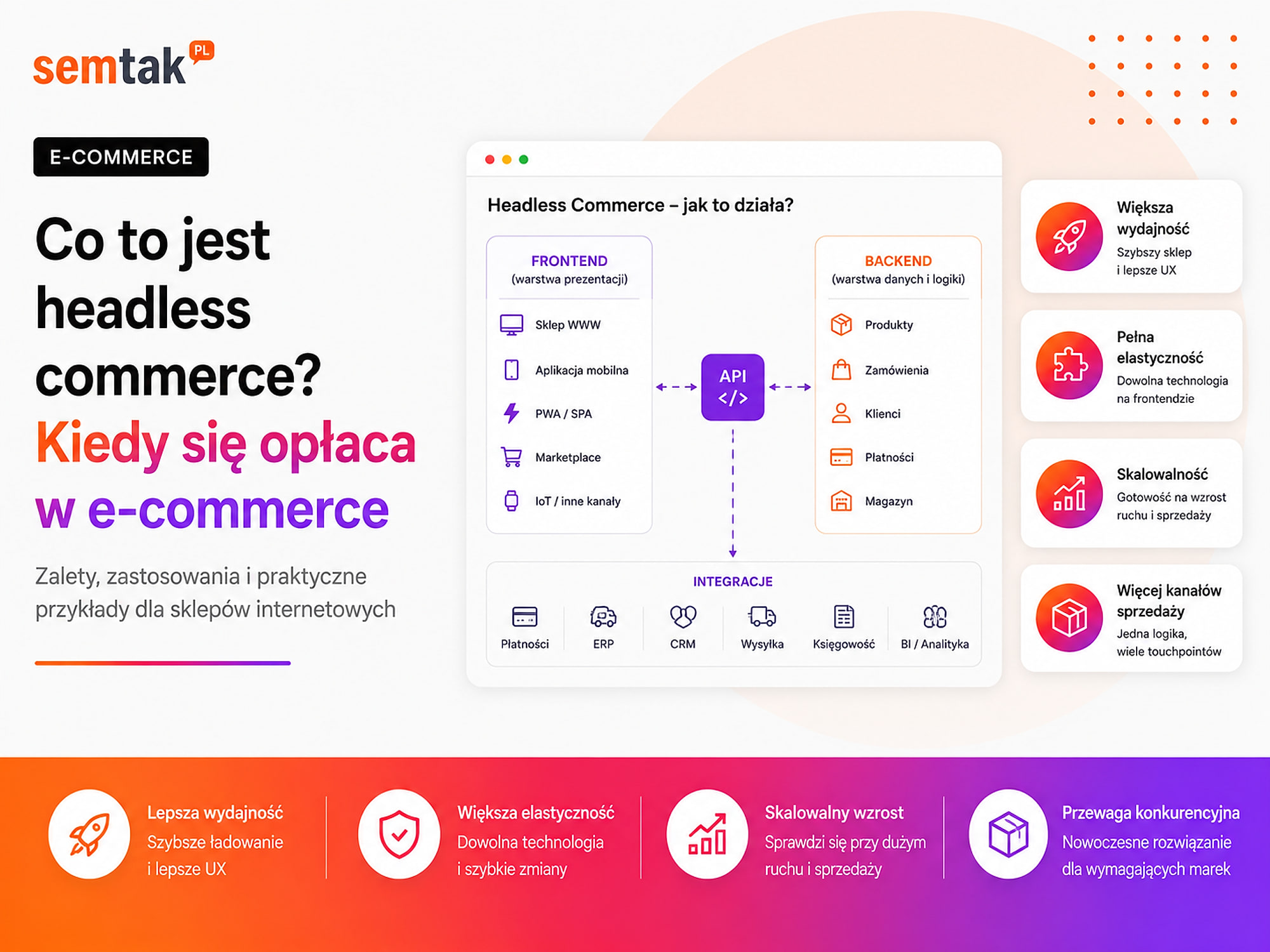
Headless commerce separates the storefront from WooCommerce, but on its own that does not fix performance, SEO or sales. We explain how it works, how it cooperates with WooCommerce and how to tell whether such an investment makes sense for your e-commerce.