
Long tail keywords are long, multi-word phrases — for example "red leather women's shoulder bag" — that have lower competition and higher conversion than general phrases such as "bag". Long tail positioning is the deliberate practice of capturing traffic from hundreds of such precise queries instead of fighting over a handful of the most popular words. It is one of the most effective SEO strategies for online stores with a large product range.
In short
Long tail keywords are longer, more specific queries (e.g. "black height-adjustable desk under £200" instead of "desk"). Individually they have lower volume, but there are a great many of them, they are easier to rank for and closer to a buying decision — so together they deliver valuable traffic and conversions. Long tail positioning means building content (categories, descriptions, guides, FAQs) that answers these specific intents.
What is a long tail keyword?
We divide keywords into three types according to length and intent:
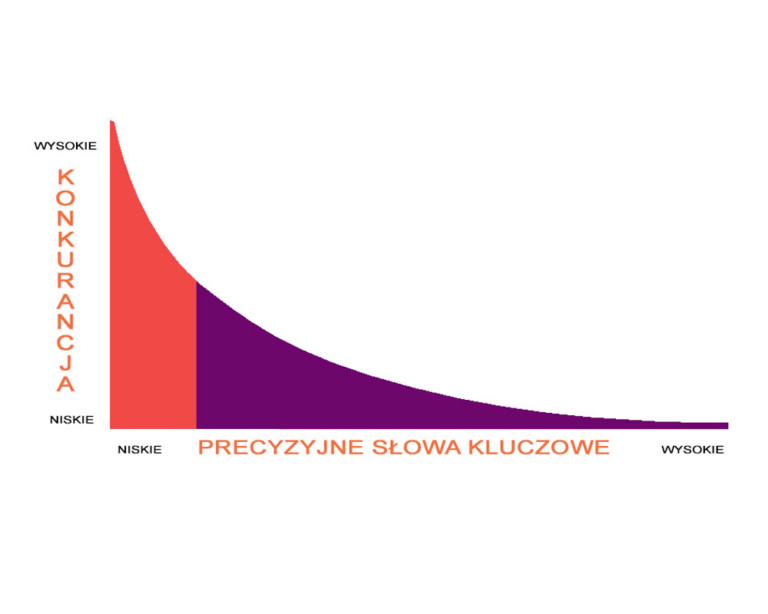
- Head — a single word, e.g. "bag". Huge search volume, but also huge competition and blurred intent (someone is searching, browsing, comparing).
- Middle — two or three words, e.g. "red women's bag".
- Long tail — four words or more, e.g. "red leather women's shoulder bag". Low volume per single phrase, but clear buying intent and low competition.
A single long tail phrase brings in little traffic. But there are thousands of such phrases, and their sum — the so-called long tail of the distribution — often generates more valuable traffic than a handful of general phrases combined.
Why are queries getting longer?
The way we search on Google has changed radically. Voice search, typing out full questions and the growing awareness of users all mean that queries are longer and more precise. Instead of "shoes" we type "women's waterproof trekking shoes size 39".
A new factor has been added on top of this: AI Overviews and AI-generated answers (Google SGE, ChatGPT, Perplexity). Language models understand the context of a full, descriptive query far better than a single word — and your store has a real chance of being cited precisely for a specific question, not for a generic one.
Advantages of long tail positioning
Long tail is not a "cheaper alternative" to big phrases — it is a different, often more effective lever. Here is what you actually gain:
- Lower competition, faster results. A phrase with a few thousand results is easier to fight for in the TOP 10 than a phrase with millions of results. Results appear sooner.
- Higher conversion. Someone who types "red leather women's shoulder bag" knows what they want and is closer to a purchase decision than a person searching for just a "bag". The traffic is smaller, but hotter.
- Stability. Traffic spread across hundreds of phrases is more resilient to fluctuations than dependence on a single big phrase that may drop after an algorithm update.
- Better match to your offer. With a wide product range the customer lands straight on a specific product instead of digging through the catalogue.
- Safe technique. Long tail relies on real content matched to intent, not on artificially stuffing in keywords — it is pure White Hat SEO.
Long tail in a WooCommerce store — where exactly?
In an online store the long tail does not live on the blog — it lives in the store's structure. Four places where long tail keywords earn the most:
- Category and subcategory pages. These are your main revenue pages. The category "Leather women's bags" targets a specific, longer phrase and aggregates products under one intent.
- Product pages. The product title, description and attributes naturally form long phrases (brand + model + colour + feature). A unique description beats the generic manufacturer's description.
- Filters and attributes. Filtering by colour, size or material generates hundreds of long tail combinations. It is a double-edged sword — some valuable combinations are worth indexing as a landing page, the rest should be controlled with canonical and robots so you do not blow up duplicates.
- Supporting content. Guides and how-tos capture informational phrases ("how to choose the right bag size") that you close off with a link to the category.
Deciding which filter combinations to index and which to block is a typical moment where an SEO audit comes in handy — without it, it is easy to index thousands of empty, almost identical subpages and harm the whole store.
How do you find long tail keywords?
You do not guess — you read the data. Proven sources of long tail phrases:
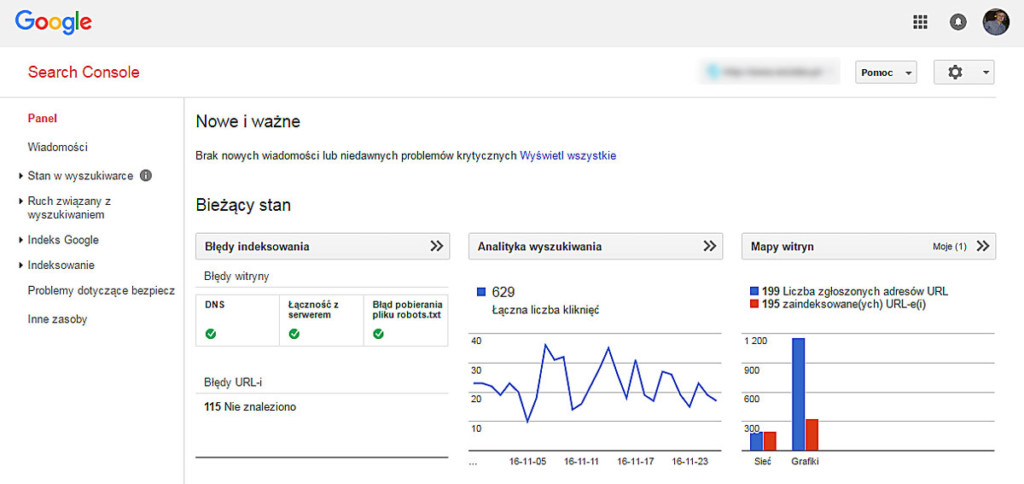
- Google Search Console — the "Performance" report shows which phrases already get impressions for you but at a weak position. That is a ready-made list to refine.
- Google autocomplete plus the "People also ask" and "Related searches" sections — they show directly how people phrase their queries.
- Your on-site search engine — what customers look for on your own store is pure gold of buying intent.
- Keyword research tools (Ahrefs, Google Keyword Planner) — to estimate volume and difficulty.
You assign each phrase to the one page that best answers the intent. If two pages target the same phrase, you risk cannibalisation — and both lose.
Who does long tail work for, and who not?
Broad positioning shines where there are many subpages and many intents: stores with a wide product range, classifieds sites, large knowledge-base websites. The more products and categories you have, the greater the long tail potential.
On a small, few-page business-card site there is simply nothing to build a long tail from — there it makes more sense to work on a handful of key phrases and content. If you are not sure which group you belong to, start with website positioning and growing your site structure.
Frequently asked questions
How many words does a long tail keyword have?
Usually four or more, although it is not the length itself that matters but the precision and low search volume. "Women's waterproof trekking shoes" is long tail even though it has only four words, because it describes a very specific intent.
Does long tail bring little traffic?
A single phrase — yes. But the sum of hundreds of such phrases can outperform the traffic from general phrases, and on top of that it converts better, because it reaches people who are ready to buy.
Does long tail work in a WooCommerce store?
Yes, it is practically its natural environment. Categories, attributes and product pages in themselves create thousands of long phrases. The key is correct technical execution and control of filter indexing. More in the guide WooCommerce store SEO — where to start .
Long tail or general phrases — which to choose?
It is not an "either–or" choice. Long tail delivers faster results and sales to begin with, and the authority built on it later makes it easier to fight for general phrases. A good strategy combines both levels.
How quickly do you see the results of long tail positioning?
Low-competition phrases can jump up faster than general phrases, but the exact time depends on the technical condition of the store, the domain authority and the quality of the content. A realistic timeline will be shown by an audit of your site.
Want to take over the long tail and sell from Google?
At SEMTAK Marketing Agency we structure phrases for real sales — from categories and product pages to filter indexing control:
- Online store SEO — more customers from buying phrases.
- SEO audit — we will check the structure, filter indexing and phrase cannibalisation.
- WooCommerce store development — a store built for long tail from the ground up.
- SEO packages — ongoing work on visibility and sales.
Want to start with e-commerce basics? See the complete WooCommerce store guide and calculate how much you lose to poor visibility in the sales-loss calculator.